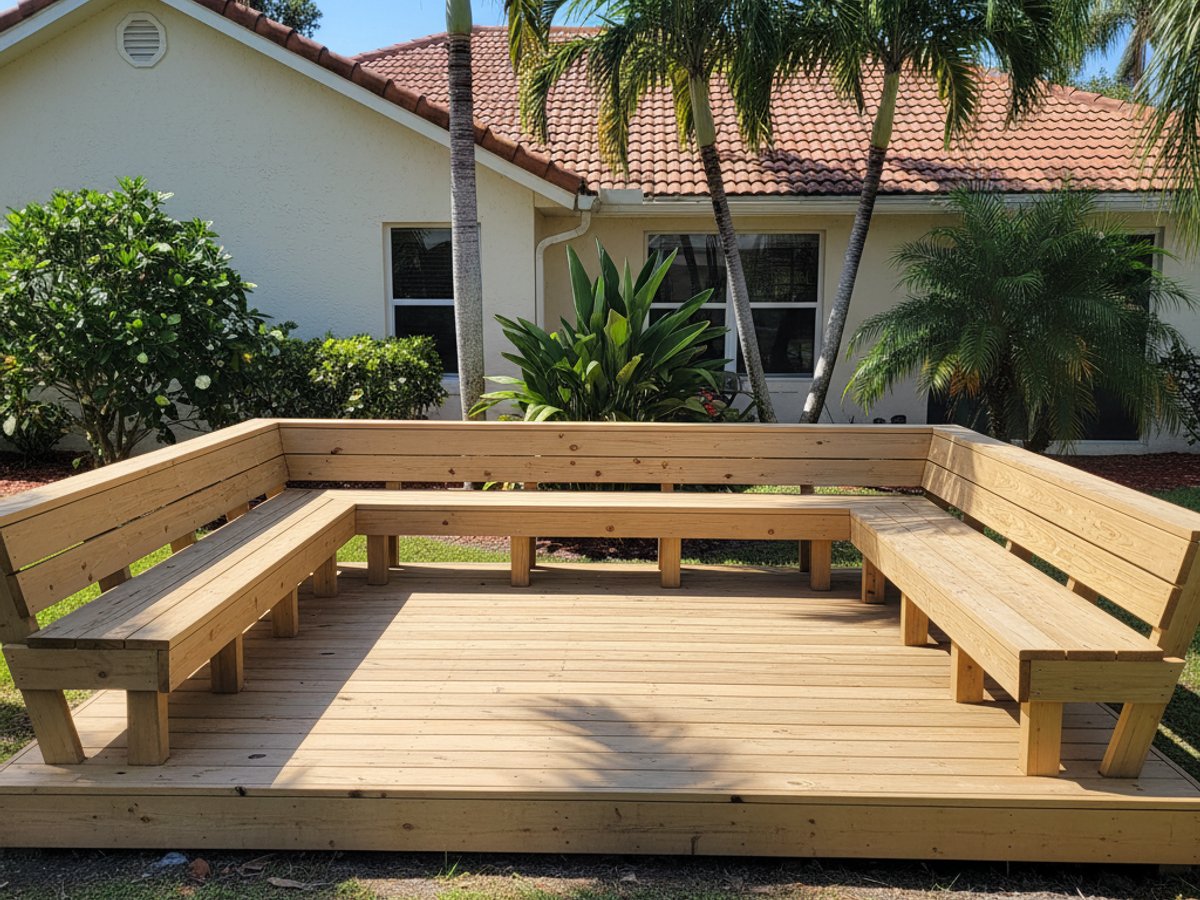
A deck is one of the few home improvements where the mistakes are buried. Once the boards go down, nobody sees the footings, the ledger flashing, or whether the joist hangers are rated for the load. That's exactly why picking the right builder matters more here than it would for, say, a fence. You're trusting someone with the part you'll never inspect again.
Start with the license, but don't stop there
Florida requires a licensed contractor for any deck attached to a house, and for most freestanding ones over a certain size too. Ask for the license number and check it against the state's database yourself, don't just take their word for it. Then ask about insurance specifically: general liability and workers' comp. A guy working solo without workers' comp is one fall off a ladder away from you being on the hook for his hospital bill.
Ask how long they've been pulling permits in Broward County specifically. A builder who's only worked in, say, Central Florida might not know that our wind load requirements and our termite pressure are different animals.
The permit isn't paperwork, it's an inspection
In Fort Lauderdale and the surrounding towns, a deck attached to the house needs a permit through the local building department, and that means at least two inspections: one after the footings and framing are in but before the decking goes on, and a final once railings and stairs are complete. The inspector is checking ledger board attachment, footing depth, joist spacing, and railing height, usually 36 inches minimum for residential. If a builder tells you permits are optional or that they'll "handle it later," that's your first red flag. Unpermitted decks show up on home inspections when you sell, and buyers' agents around here know exactly what to look for.
Some neighborhoods, especially newer subdivisions out toward Weston and Plantation, also have an HOA that reviews the design before the city ever sees it. If you're in one of those, ask upfront whether your builder has dealt with HOA approval before. It adds two to four weeks to the timeline if they haven't done it and don't know what the board wants to see.
What our ground and our weather actually do to a deck
South Florida soil is mostly sand, which drains fast but doesn't hold a footing the way clay does further north. Footings here typically go down to solid bearing, often 24 to 36 inches depending on soil report and local code, sometimes deeper if the water table is high on your lot. Ask how they're sizing footings for your specific yard, not just running a standard spec from the last job.
Then there's the air itself. We get roughly six months of real humidity and heat, June through November lines up with hurricane season too. Fasteners matter more here than almost anywhere else in the country. Pressure-treated lumber is corrosive to plain steel, so a builder should be using hot-dip galvanized or stainless fasteners and hardware, not whatever was cheapest at the box store. If you're within a mile or two of the Intracoastal or the ocean, salt air will chew through standard aluminum railing brackets in a few years. Ask what grade of aluminum or stainless they're specifying for railings on a coastal lot.
Wood decking also has to survive our humidity without cupping or splitting, and it's a target for subterranean termites the day it touches soil. A builder who's serious about this will talk to you about ground clearance, about whether composite makes more sense for ground-level framing, and about how they're treating any wood that sits close to grade.
Old street or new subdivision, the job is different
Neighborhoods like Rio Vista, Victoria Park, and parts of Wilton Manors were mostly built from the 1940s through the 60s. On those lots you're often dealing with an older slab, existing plumbing or drainage lines you don't want a footing to hit, and sometimes a house that's already settled a little unevenly, which affects how a ledger board should be attached. Newer subdivisions further west have more predictable fill and grading, but they also tend to have HOA rules and setback lines that need checking against a survey before anyone digs.
A builder who asks to see your survey, or asks whether one exists, is doing it right. One who just eyeballs the yard and starts measuring boards is skipping a step that matters.
What to walk away from
- A bid that's dramatically lower than the other two or three you got, with no explanation for the gap. Somebody is cutting corners on footings, fasteners, or lumber grade.
- Cash only, no written contract. You want a scope of work, a materials list naming the actual product, and a payment schedule tied to inspection milestones, not one big deposit upfront.
- Vague answers about permits, or a suggestion that you skip one because "it's just a small deck."
- No mention of railing height, stair rise and run, or how the ledger attaches to your house. If they can't talk through those details in the first conversation, they haven't thought about your specific job yet.
- Reluctance to give you a timeline. A typical wood or composite deck installation in this area runs somewhere around one to three weeks depending on size and inspection scheduling, longer if there's an HOA review in the mix. Anyone promising it in two days is either doing something very small or skipping steps.
Ask to see the framing before it's covered up
The single best thing you can do is ask your builder to walk you through the framing in person, or at least send photos, before the decking boards go on. That's the point where footings, joist hangers, and ledger flashing are all visible and all correctable. Once the boards are down, you're trusting that it was done right underneath. A contractor who's happy to show you that stage, and explains what you're looking at without being asked twice, is usually one who has nothing to hide.
We've built and repaired decks up and down this coastline long enough to know what the salt air, the sand, and the hurricane season do to a structure over time. If you're weighing bids right now, take a look at our deck builder work and ask us the same questions you'd ask anyone else. You should be able to get straight answers before you sign anything.