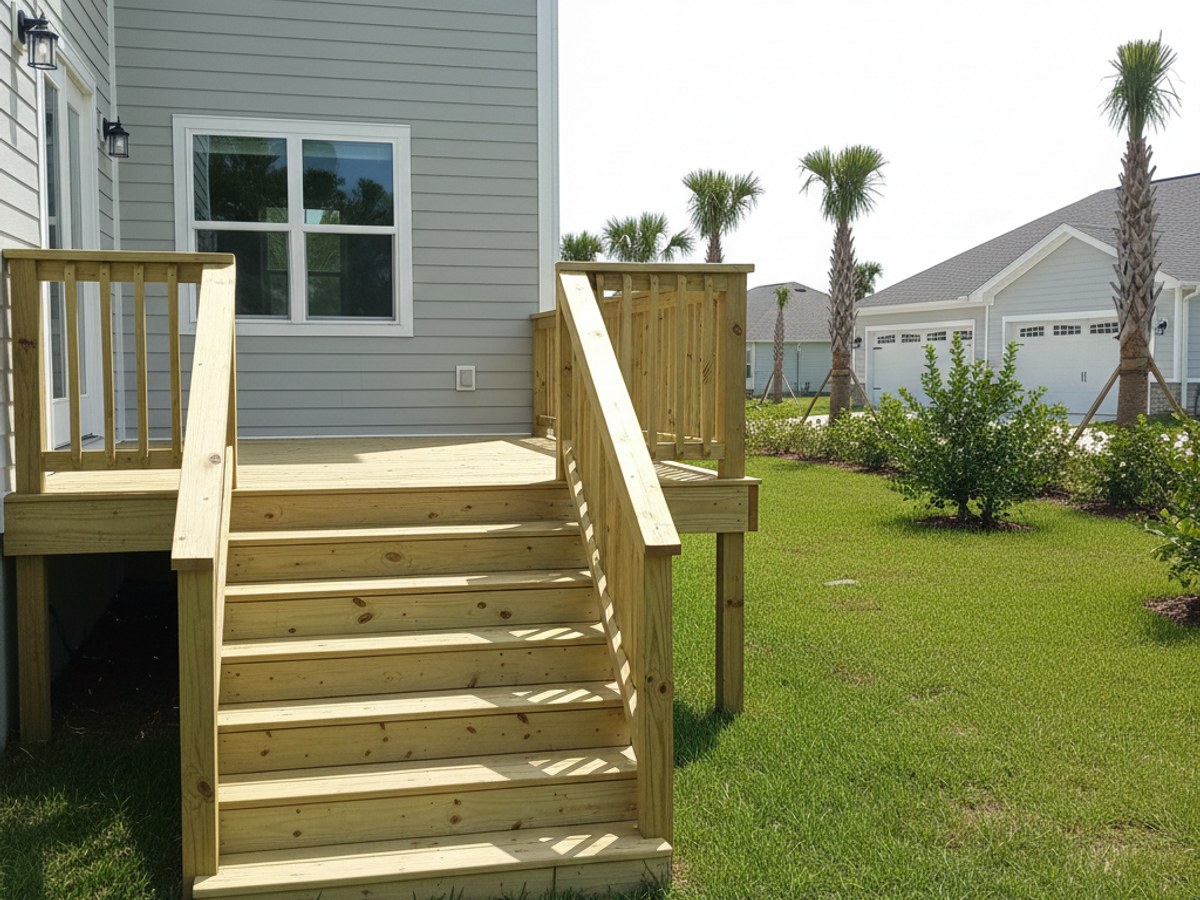
Ask five contractors in Broward County when the best month for deck work is and you'll get five different answers, but most of them are circling the same truth. This part of Florida doesn't have a winter that stops outdoor work. What it has instead is a wet season that soaks everything from June through September and a dry season from roughly November to April that's genuinely easier to build in. The calendar matters more here than people expect.
Rain is the real scheduling problem, not heat
Fort Lauderdale summers run humid and hot, but the heat itself rarely shuts down a job site. What shuts it down is the 3pm thunderstorm that shows up almost every afternoon from June through September. A concrete footing pour that takes two hours in January can turn into a half-finished mess in July if the sky opens up before the mix sets. Framing crews lose whole afternoons waiting out storms that weren't in the morning forecast.
Staining and sealing are even more weather-sensitive. A sealant needs roughly 24 to 48 hours of dry weather to cure properly on the wood, and in rainy season that window just doesn't exist half the time. Apply a coat and get hit with rain six hours later, and you're looking at blotching, white haze, or a coat that never bonds right. That's why most deck staining around here gets scheduled for the dry months, not because the wood cares about temperature, but because the sky has to cooperate for two straight days.
Hurricane season shapes more than people realize
June 1 through November 30 is hurricane season in South Florida, and it affects deck work even in years with no direct hits. Lumber suppliers slow down ahead of a forecast storm. Permit offices get backed up after one passes, since roofing and fence repairs jump the line. If you're planning a new deck or a railing replacement for late summer, build in extra time, because the trade as a whole gets squeezed from both ends during those months.
There's also the structural side. Railings and ledger connections here need to meet wind load requirements that are stricter than most of the country, and for good reason. A deck railing that's just toe-nailed on might pass casual inspection in a drier climate, but code here wants lag bolts or through-bolts and proper flashing at the ledger board, because that connection is what keeps the whole structure attached to the house in a storm.
What the ground does to footings
Most lots in and around Fort Lauderdale sit on sandy soil, which drains fast and is actually easier to dig than clay. The complication is the water table. In neighborhoods close to the canals, like Rio Vista, Lauderdale Isles, or anything near the Intracoastal, you can dig a footing hole two feet down and hit standing water, especially in wet season when the table rises. That changes how footings get poured. Crews often need to pump the hole dry first or use a sonotube form to keep the concrete from washing out before it sets.
Footing depth and diameter around here are driven less by frost, which isn't a factor in Florida, and more by wind uplift and soil bearing capacity. A lot of jurisdictions in Broward County want footings sized for 140-plus mph wind exposure, so don't be surprised if an inspector asks for bigger footings than you'd see in a cooler state. Dry season makes this part of the job faster simply because the hole you dig in January stays a hole, instead of filling in with groundwater before the concrete truck shows up.
Permits and inspections, and how the season affects them
Most attached decks need a permit through the city or through Broward County, depending on where the lot sits, and that usually means at least two inspections: one after the footings are dug and before the pour, and another once the framing is up but before the boards go down. Older platted lots in neighborhoods like Victoria Park or Flagler Village sometimes need a setback check against the property survey too, since lot lines there were drawn decades before anyone thought about adding a deck. Newer subdivisions further west tend to have more standardized lot shapes and fewer surprises, but many of them also have an HOA that wants to approve the design before the city even sees the permit application.
None of that changes by season, but the wait times do. Inspectors get busier after storm season because roof and fence damage takes priority, so a permit pulled in October might sit longer than one pulled in February. If your timeline matters, dry season isn't just better for pouring concrete, it's better for getting someone to actually come look at it.
Wood, composite, and what the climate does to each
Pressure-treated pine is still common here because it's cheap, but Florida's humidity means it arrives from the lumberyard wetter than it should be, often well above the 15% moisture content you want before staining. Left to sit through a humid summer, it can cup or twist before you ever get a sealant on it. Composite decking skips a lot of this, since it doesn't take on moisture the same way and doesn't need staining at all, which is part of why it's become the default for pool decks and anything near saltwater air. It still gets hot enough in direct August sun to be uncomfortable barefoot, something worth knowing before you commit to a dark color.
Termites are a year-round concern in South Florida, not a seasonal one, but subterranean termite swarms do pick up in spring after a rain. Any wood framing member that touches or sits close to grade is worth treating or replacing with a termite-resistant option regardless of when you build.
So when should you actually book the work
If you have flexibility, November through April is the easier window for new builds, framing repairs, and footing work, because the rain holds off and the humidity drops enough for stains and sealants to cure the way they're supposed to. If a board's rotted through or a railing's come loose, don't wait for a better month. Structural repair work doesn't get less urgent because it's July. We handle jobs in every season at Oasis Deck Company, and plenty of the repair calls we get in August are for damage that started small and got worse through a few months of rain nobody scheduled around.